Most restaurant SEO advice covers the same ground: claim your Google Business Profile, add photos, get some reviews. These basics matter, but they will not differentiate you in a competitive local market where every restaurant on your high street has followed the same advice. The restaurants that consistently dominate local search in the UK have gone further: they have built a complete, technically sound online presence that signals quality and relevance at every layer Google evaluates.
Why Is Restaurant SEO Different from Standard Local SEO?
Restaurants are one of the most intensely competed categories in local search. A medium-sized UK town may have 50 or more restaurants competing for "restaurant [town]" and its variants. The queries are also unusually specific: people search by cuisine type ("Italian restaurant Manchester"), dining occasion ("fine dining London," "family restaurant with kids menu"), dietary requirement ("vegan restaurant Leeds," "gluten free restaurant Edinburgh"), and neighbourhood ("restaurants in Islington," "where to eat in the Jewellery Quarter").
This specificity is an opportunity. Generic optimisation for "restaurant [town]" puts you in direct competition with every other restaurant. Specific optimisation for "best Sunday roast [town]," "plant-based restaurant [town]," or "private dining room for 20 [town]" targets the exact query at the moment of highest intent with far less competition.
How to Optimise Your Google Business Profile for More Bookings
Choose the Right Categories
Your primary GBP category should be the most accurate description of your restaurant type. Google offers specific categories like "Italian Restaurant," "Sushi Restaurant," "Gastropub," "Cafe," and many others. A generic "Restaurant" category misses the specificity that helps Google match you to cuisine-specific searches.
Add secondary categories for every distinct aspect of your offering: if you do Sunday roasts, add "Pub." If you offer afternoon tea, "Tea House" is a valid secondary category. If you have a bar, "Bar" as a secondary category helps you appear in bar-adjacent searches.
Menu Section
The menu section of your GBP is one of the most underutilised features in restaurant profiles. Adding your full menu (or at least your key dishes) with descriptions creates indexed content that Google uses for dish-level searches. Someone searching "restaurants serving duck confit [town]" can only be matched to your profile if your menu content mentions duck confit.
Update your menu seasonally. Stale menus with dishes you no longer serve damage trust when customers see them and cause friction at the point of reservation.
Booking Integration
Connect your reservation system (OpenTable, Resy, ResDiary, Zettle) to your GBP to enable direct booking from your profile. The "Reserve a table" button dramatically reduces the friction between Google search intent and a confirmed reservation. Profiles with booking integration convert searches to reservations at a materially higher rate than those without.
Photos: Quality and Frequency
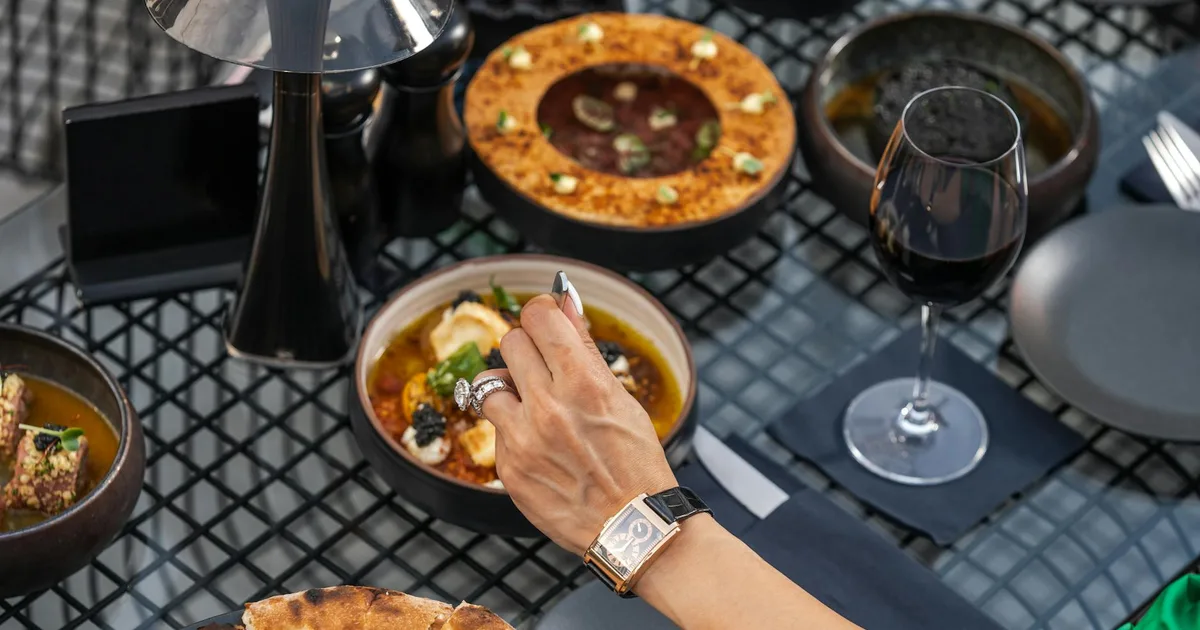
Food photography is a direct driver of reservation decisions. Research from Google shows that restaurants with more than 100 photos receive over 1,000% more calls than those with fewer than ten. This extreme ratio reflects how central visual impression is to restaurant selection.
Prioritise:
- Hero shots of your most visually striking dishes
- Interior photography showing the atmosphere in different lighting conditions (lunch vs dinner, empty vs a busy service)
- Exterior photography including street-facing signage so customers can find you
- Team and kitchen photos to add personality
Post new photos monthly. Recency of photos is a relevance signal; a profile that has not had new photos for two years signals an inactive business.
What Structured Data Should Restaurants Implement?
Restaurant schema is one of the most developed areas of Schema.org, with properties specific to food service businesses that most restaurants have not implemented.
A complete Restaurant schema block should include:
name,address,telephone,url,openingHoursSpecificationservesCuisine: the cuisine type or types you offer ("British," "Italian," "Contemporary European")priceRange: a rough indication using pound signs (£, ££, £££, ££££)menu: a URL linking to your digital menuhasMenu: using a Menu schema type if you want to mark up individual menu sections and itemsacceptsReservations: true or false, with a URL to your booking system if truestarRating: if you have a Michelin star or AA rosette, this is schema-markable
Menu schema (MenuItem type) allows you to mark up individual dishes with name, description, price, and dietary restrictions. This feeds dish-level data into Google's understanding of your menu and can influence appearance in specific food-related queries.
How Should Your Restaurant Website Be Structured for SEO?
Dedicated Pages for Key Occasions and Experiences
Create dedicated pages for distinct occasions and offerings rather than trying to cover everything on your homepage. Common high-value page types for UK restaurants include:
- Private dining and events (consistently high search volume and high ticket value)
- Sunday lunch or Sunday roast
- Set menus and prix fixe offers
- Dietary-specific menus (vegan, gluten-free, halal)
- Gift vouchers
- Takeaway or delivery (if offered)
Each page targets specific queries and can rank independently. A page titled "Private Dining Manchester" targeting "private dining room Manchester for hire" will rank for that query; your homepage targeting "restaurant Manchester" will not.
Location Pages for Restaurant Groups
If you operate multiple sites, each location needs its own page with unique content. Generic location pages that copy the same text with the address changed will not rank. Each location page should include: the specific address and embedded map, locally relevant information (nearby landmarks, parking, transport links), team members specific to that site, and testimonials from customers at that location.
Your Menu as SEO Content
Your menu page should not be a PDF. PDFs are not indexed well by Google and are inaccessible on mobile. Your menu should be HTML text, properly structured with headings for each section, so that dish names and descriptions are indexed. This creates dozens of additional keyword signals from your actual menu content.
How Do You Build Backlinks for a Restaurant?
Restaurant link building is underrated but meaningful in competitive local markets.
Food bloggers and local media: Invite local food journalists, bloggers, and influencers for a press visit. A positive review with a link from a food publication or lifestyle website is one of the most valuable links a restaurant can earn.
Awards and guides: UK restaurant awards (AA Rosettes, Good Food Guide listings, local Best Restaurant lists) come with citations and links on high-authority domains. Pursuing accreditation is both a quality signal and a link-building strategy.
Local collaborators: If you work with local suppliers, feature them and ask for a return mention. A high-quality local farm, brewery, or artisan producer featured on your menu is often happy to mention their stockist restaurants with a link.
Events coverage: Hosting or participating in food festivals, charity events, or community activities generates local press coverage and citations from local authority and community websites.
If your restaurant is not appearing prominently when local diners search for exactly the kind of food you serve, Dynamically can build a local SEO strategy that changes that. Get in touch for a free local search audit.